Round-up 28: Happy PTA Week
- Sammy Castellino

- Sep 28, 2025
- 8 min read
The times they are a changin’. The lyrics and overall poetry of Bob Dylan have been bringing me quite a bit of comfort the last couple of weeks. Things seem to have settled down a little bit, and this also soothes my anxiety. The reactions around the political strife we’ve been facing as a country does seem to be bringing us closer together rather than farther apart. Time will tell.
I’ve been watching some good movies the last couple of weeks, and I’m excited ot get into it with you guys. The every-two-weeks approach has been working a bit better within my school schedule, I appreciate the space it gives me for letting whatever I’ve been watching marinate for a little bit before I deliver my full comments. I’ve also been actively working on my first major film project (to make it beyond the screenplay), and that has been eating up a lot of my time, in a very good way. I’m excited to share more about it as I get more completed.

My first viewing was a rewatch of one of my favorite comedies to ever be thought of, This is Spinal Tap (1984), directed by Rob Reiner. I have seen the film a handful of times before this most recent viewing, but I did not truly appreciate the genius that went into not only the jokes, but the structuring of the (lack of) plot as well. For those who don’t know, Spinal Tap follows a British rock band of the same name as they travel around America for a major tour. A documentary filmmaker, played by Reiner himself, follows the band around on their tour as they get into shenanigans and have interpersonal dramas threaten the stability of the group. The number of jokes that whiz by your face throughout its sub-90-minute runtime is impressive, especially when a number of them are under the hood and require a second viewing. One of my favorite visual gags of the film is early on at a promotional party for the new album they are promoting; the three major stars of the band are all shown with herpes on their lips throughout, though it is never addressed. It’s small moments like this that reward a more patient audience, and I am all for it. Endlessly quotable, musically sound, and surprisingly wholesome by the end of it all. Eleven out of ten, if you ask me.

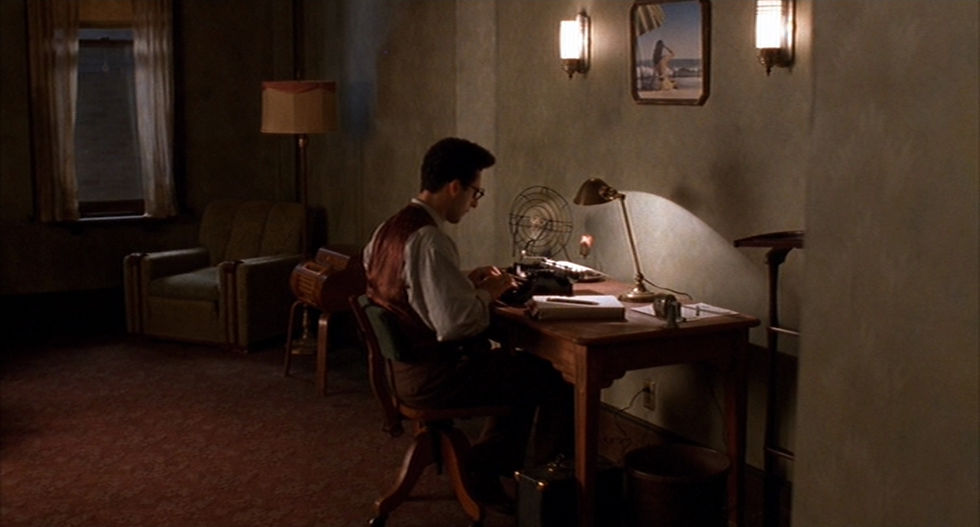
I also rewatched one of my favorite Martin Scorsese joints, After Hours (1985). I have only seen this once or twice before, and being a proud owner of the 4K UHD Criterion copy, I felt obligated to throw it on when desperately seeking something comic. And that’s something that I fear is overlooked often about this flick: how damn funny it is. Sure, it is technically a beautiful film and one to be studied, but Marty also goes balls to the wall with his wild and absurd sense of humor. Not punchlines, but situational humor that doesn’t seem to end. The story follows a young man who, after a day of monotonous word processing, falls for the wily charms of a young woman while out at a diner. They hit it off and he is invited to her apartment in SoHo very later that night. This is where things get very strange for our protagonist, as a series of strange encounters suggest there is a greater power keeping him from “just getting back home”. Bizarre women becoming obsessed with him, mobs of vigilantes accusing him of robbery, and a mean-spirited metro employee just to name a few of his hurtles. For someone who has made his career around humanistic dramas and gangster flicks, this was and still continues to be a standout of Scorsese’s filmography. For my money, this is probably in his top three best works of all time.

In the next addition to my film class journey, I was assigned Beauty and the Beast (1946), directed by Jean Cocteau and based on the original short story by Jeanne-Marie Beaumont from the 1700s. My only exposure to the story previously was the Disney adaptations, of which I had assumed there was an original non-Disney-ified story of, but never cared to seek out. I’m glad this was assigned, as I found it to be very enlightening, a different perspective on the famous fairy tale. The film itself is not what I thought it would be, as the imagery was clearly the focus rather than the characters themselves. This made for an interesting film to watch in this day in age, as all of the effects were done practically and through the black and white image. This amplified the magical quality of the film, feeling as though you were being lost in someone else’s dream. The finale felt a little goofy when compared to the rest of the film, but not a major detractor from the overall enjoyment, in my opinion. Definitely worth a watch, especially if you’re a fan of the Disney version.

More than anything, I’ve definitely felt the passing of David Lynch the most intensely. Every time I go about watching one of his films now, I feel something heavy weighing down on me. I’d like to think it’s David giving me a hug, but I’m dramatically inclined, so maybe a projection. Regardless, I felt his presence while giving some love to Blue Velvet (1986), which in my opinion, is his best film of them all. While very close with the likes of Mulholland Drive (2001) and his work on Twin Peaks, there’s something especially and uniquely Lynchian about Blue Velvet. There’s this goofy, almost soap opera-like humor that is woven throughout, that all of the characters take part in. What stood out to me the most in this viewing was the hilarity that combated the horror of Dennis Hopper’s Frank Booth; alone, easily one of the most iconic characters to come out of Lynch’s brain. But what sets him apart, other than his hysterical use of the word “fuck”, is his humanistic take on a psychopath, not in the connotation you’re thinking. He's humanized through his lust, through his interactions with those around him, and his raw desire for power. Instances of this psychological approach can be seen in numerous instances throughout the film, but chiefly among them is the assault sequence hardly half way through the runtime. Kyle MacLachlan serves as the antithesis of Hopper’s character; an innocent young man, desperate to understand the horrors lurking under neath the surface of suburbia. A beautifully provocative film that demands to be seen by all.

In anticipation of his newest film, I went back and rewatched my all-time favorite Paul Thomas Anderson film, Boogie Nights (1997). I wrote in my Letterboxd review that this was my “come to Jesus” film-bro moment, and I stand by that sentiment. Once again, a provocative film, but a deeply humorous one at that. The story follows a young man played by Marky Mark Wahlberg, who is quickly recruited by a porn producer, Burt Reynolds, in late 1970s California. Through his eyes, we witness his rise and fall through the porn industry’s hay day. Expectedly graphic, but unexpectedly human. All of the characters in this ensemble cast yearn for belonging and acceptance by their peers and society as a whole. Beyond the deep care Anderson gives to his characters, as he always does, the way in which the film is shot feels almost avant-garde at times, very “arthouse”, while remaining grounded within the story. Colors galore and a vault of quotes that remain the top of PTA’s work. Phillip Symour Hoffman also is in the film, and I endlessly love and miss him, so it’s always bittersweet to see him as well. If you haven’t seen this film, I cannot begin to recommend it enough. For all the reasons mentioned above and more that I’m too lazy to note. Just go watch it.

And speaking of huge recommendations and Paul Thomas Anderson, I went out of my way to see One Battle After Another (2025) this past Friday, on release day. I was a bit disappointed to see it was only myself and one other guy in the theater, especially given how much is riding on giving PTA such a massive budget. But I digress, the film itself is, plainly put, a fucking masterpiece. More complexly put, it delicately walks the tightrope of being commentary on our sociopolitical landscape and simultaneously being a laugh-out-loud satirical comedy. Oh, and it’s an action film. PTA pulled out all the stops for this one, not only assembling an ensemble cast led by Leonardo DiCaprio, Benicio Del Toro, Teyana Taylor, Regina Hall, Sean Penn, and newcomer Chase Infiniti; but by also throwing them into a chaotic world modeled after one of the most absurd novels I’ve ever read. It’s important to note that One Battle After Another is loosely based on Thomas Pynchon’s novel, Vineland, a similarly satirical commentary on post-Reagan politics and the remaining hippies battling them. The adaptation takes place in the present day, following a group of revolutionaries who fight a fascist government through violence anarchy. The story takes its time, like a novel would, getting you accustomed with the backstory behind the organization and how they fell apart. The main chunk of the film takes place sixteen years after the prologue of sorts, where DiCaprio’s Bob and Infiniti’s Willa live in hiding from the government. The walls of their peace come crashing down when the rogue leader (Sean Penn) of a militant group comes breaking down their front door, and they’re forced to go on the run. What follows is, essentially, a series of action sequences that do not let up until the final moments. The chaos is delicately controlled by PTA’s stellar directing. Every single character is given moments to shine, but I must say, the dad bromance between Leo and Benicio was easily the funniest and most entertaining part of the whole film. This is not to say there wasn’t anything else great, because watching PTA’s take on action sequences just goes to show you how much creativity is still out there. There’s an extended car chase towards the back half of the film that goes impeccably hard. More than any of that, I am seeing and hearing a lot of people calling this “the defining movie of a generation”, and as I’ve had a couple of days to reflect on that sentiment, I do say I have to agree. This is the first new film to come out in a while that got me as excited and engaged as it did, while also showing a new flock of aspiring filmmakers that there is still hope. An odd theme of the film considering its dark subject matter, but I respect it. I am inspired, so for that alone, I am grateful to Mr. Paul Thomas Anderson. I deeply encourage everyone to go to the theater to see this film.

I had a very good couple of weeks, all things considered. Football has been back in full swing, I’ve been reading The Trial by Franz Kafka, I’ve been making an effort to communicate with anyone and everyone about where we go from here, which I think is a conversation we need to continue to have. What I find interesting about One Battle After Another in this context is how it doesn’t take a decided stance on the violence or the reasoning behind it, but rather, shows it for what it is: death and destruction. Or, at least, that was one of my takeaways. I’m going off on another tangent. No more. The Buffalo Bills play the Saints in an hour or so. I’ve got to lock in for that. Go watch a movie. In the theater, if you can. Until next time.


Comments